When the Trail Tells the Truth: How Backcountry Adventures Can End Friendships
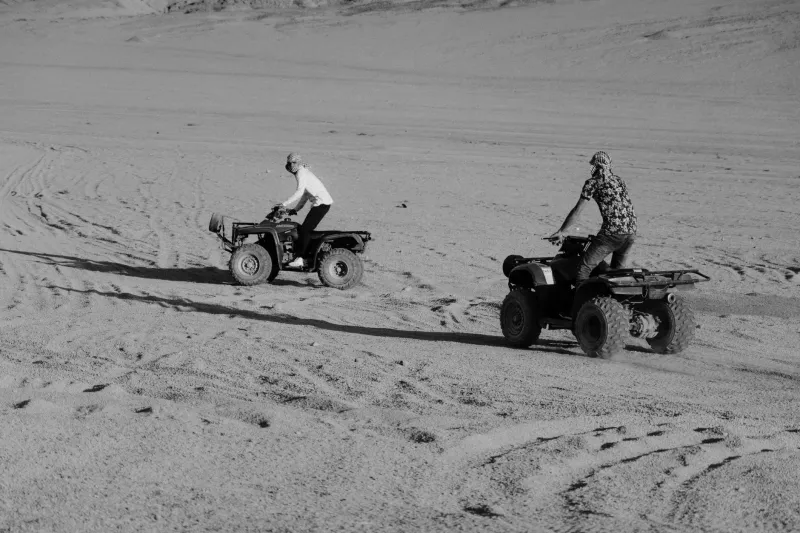
You've been friends with this person through job changes, breakups, cross-country moves. You've shared holidays, helped each other move apartments, and sat through each other's questionable life decisions without judgment. You figured a long weekend in the backcountry would be a highlight reel—campfire laughs, dusty trails, memories for the ages.
Then day two happened.
Maybe it was the argument over whether to push through a sketchy water crossing. Maybe it was the way they handled the moment the recovery strap snapped and you were suddenly stuck in a wash with no cell signal. Or maybe it was something quieter—the way they talked about leaving trash behind, or how they reacted when a decision needed to be made fast and they froze, or worse, bulldozed.
Off-road adventures have a way of doing this. They strip away the comfortable routines that let people coexist without really knowing each other. And sometimes, what's underneath isn't what you expected.
Why the Backcountry Is the Ultimate Stress Test
There's a reason military units and wilderness therapy programs use extreme environments to evaluate people. When comfort disappears—when you're tired, dirty, navigating genuinely uncertain terrain in a rented rig that's doing its best—personality defaults kick in hard.
The social filters we use in everyday life require mental bandwidth. Out on the trail, that bandwidth is allocated elsewhere: reading terrain, managing fatigue, solving problems in real time. What's left is pretty much the raw version of a person.
For some friendships, that's a gift. You discover your buddy is calmer under pressure than you ever imagined, or that they'll hand over the last of their water without being asked. Those trips cement bonds that last a lifetime.
But for others, what surfaces is genuinely incompatible. Not annoying. Not a quirk you can laugh off over beers later. Actually, fundamentally incompatible.
The Scenarios That Tend to Break Things
Risk tolerance gaps. This is the big one. One person sees a gnarly descent as the whole point of the trip. The other sees it as a liability they didn't sign up for. Neither of them is wrong—but when you're sharing a vehicle and one of you is the one holding the wheel, the disagreement stops being theoretical. Resentment builds fast when someone feels either pressured into danger or held back from the adventure they came for.
Money and resource conflicts. Multi-day backcountry trips cost real money—fuel, gear, food, the vehicle rental itself. When one person shows up underprepared or expects to split costs they didn't contribute to planning, it's not just awkward. It signals something about how they value other people's time and effort. That's a hard thing to unsee.
Environmental ethics. Leave No Trace isn't just a slogan. It's a value system. When someone in your group treats public land like a convenience they're entitled to—cutting switchbacks, leaving food scraps, not caring where the gray water goes—it can feel like a personal affront to people who genuinely care about these places. That divide runs deeper than most people expect until they're living it.
Decision-making under pressure. A rig is stuck. The sun is dropping. Options are limited. How someone behaves in that ten-minute window reveals more about their character than years of normal life. Do they panic? Do they go silent and check out? Do they blame? Do they take over without consulting anyone? Any of these can feel like a betrayal if it's different from what you thought you knew.
The Quiet Realizations Are Often the Worst
Sometimes it isn't a blowup. It's slower than that.
It's watching your friend complain for six hours straight about minor inconveniences while you're surrounded by some of the most beautiful terrain in the American Southwest. It's realizing they've spent most of the trip on their phone—or wishing they could be—while you're out here specifically because you wanted to disconnect. It's the subtle but persistent sense that you're not on the same adventure at all, even though you're in the same vehicle.
These quiet revelations are harder to process than a fight. A fight has a shape. A quiet realization just sits there, and you have to decide what to do with it.
What You Actually Do With This Information
First, give it some time before you make any decisions. The trail amplifies everything—stress, irritation, fatigue. Some of what feels like a fundamental incompatibility in the moment is just two people who are hungry and tired and over it. Wait until you're both showered and fed and a few days removed before deciding what the trip meant.
That said, don't gaslight yourself. If something genuinely bothered you—if a value difference surfaced that you can't rationalize away—that's real information. You're allowed to let it change how you see the friendship, or at least how you structure future time together.
Not every friendship is meant for every context. Some people are great for city life and terrible for the backcountry. That doesn't make them bad friends—it makes them specific ones. Adjusting what you do together isn't the same as ending the friendship.
But sometimes it is a friendship-ending thing. And that's okay to acknowledge too. Years of shared history don't obligate you to ignore what you now know about someone's values. Grief that, absolutely. But don't pretend you didn't see what you saw.
Before the Next Trip: Do the Work Upfront
The best way to protect both your friendships and your adventures is to have the uncomfortable conversations before you're three hours down a dirt road together. Talk about risk tolerance. Establish a real cost-sharing plan. Discuss what happens if someone wants to turn back and someone doesn't. Set expectations for phone use, for decision-making, for what 'roughing it' actually means to each of you.
It sounds like a lot of logistics for what's supposed to be a fun trip. But it's far less painful than discovering mid-trip that the person you thought you knew is a stranger once the pavement ends.
The backcountry is honest in a way everyday life rarely is. That honesty is part of why people keep coming back to it. Just go in knowing it tells the truth about the people you bring along, too—and make sure you're ready for whatever that truth turns out to be.

