Put the Phone Down: What Off-Roaders Discover When They Stop Scrolling and Start Driving

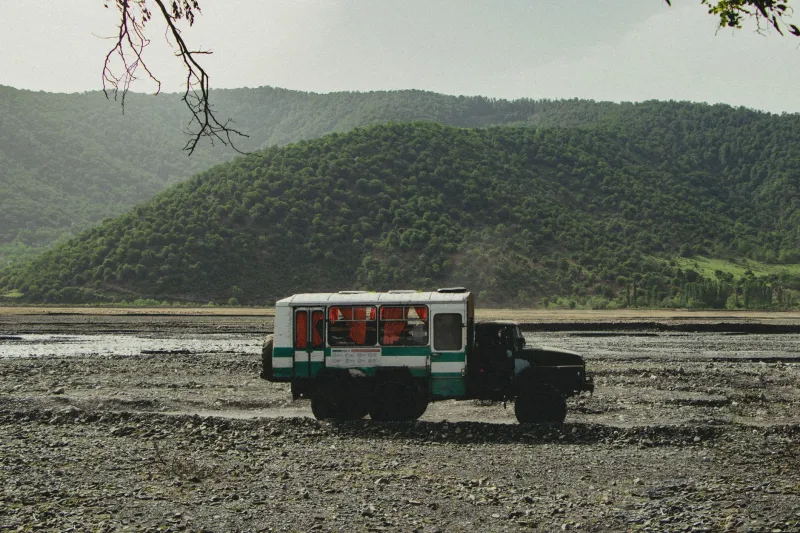
Photo by Photo by Victor Rosario on Unsplash on Unsplash
Somewhere around mile forty-three of a rutted dirt road outside Moab, Utah, Marcus finally stopped reaching for his phone. Not because he'd made some spiritual decision. Not because he read a self-help book. His phone had been dead for six hours, and he'd run out of anxiety about it.
"I kept patting my pocket," he says. "Like a reflex. And then at some point I just... forgot. And I looked up and realized I hadn't actually seen the canyon walls yet. I'd been in them for two days."
That moment — the looking up — is what a lot of off-roaders describe after they've been forced or chosen to ditch their devices on the trail. It sounds simple. It isn't. And the science behind why it matters is worth understanding before your next big trip.
Your Brain on Notifications (Even When There Aren't Any)
Here's the thing most people don't realize: you don't need to actually receive a notification for your phone to hijack your attention. Research from the University of Texas at Austin found that the mere presence of a smartphone — sitting on a seat, tucked in a cupholder — measurably reduces available cognitive capacity. Your brain is quietly, constantly allocating resources toward the possibility of a ping.
Now think about what that means when you're navigating a technical trail, reading terrain, watching for soft shoulders, or trying to stay present with the people in your rig. You're running a background process you didn't ask for and can't fully turn off as long as the device is within reach.
Adventure psychologist Dr. Leah Kimura, who has studied attention and risk perception in outdoor recreation settings, puts it plainly: "The trail demands a specific kind of focused awareness that smartphones are architecturally designed to interrupt. They're not bad tools. They're just the wrong tool for that environment."
Reckless Isolation vs. Strategic Disconnection — Know the Difference
Before anyone misreads this as a call to ditch your GPS and drive into the wilderness with zero contact plan, let's be clear: there's a meaningful difference between going dark responsibly and going dark stupidly.
Strategic disconnection means:
- Telling someone your route and expected return time before you leave cell service
- Carrying a satellite communicator (a Garmin inReach or SPOT device gives you SOS capability without requiring a cell signal)
- Downloading offline maps through apps like Gaia GPS or OnX Offroad before you lose connectivity
- Setting a check-in window — letting your people back home know you'll be unreachable from Friday evening to Sunday afternoon, for example
Reckless isolation looks like driving into a remote canyon without telling anyone, assuming your phone will work because it worked on the last trip, and leaving your emergency gear at home because the trail "didn't look that serious" on Google.
Once the responsible logistics are handled, then you get to make the deliberate choice to put the phone away. That's where the good stuff starts.
What Actually Changes When You Disconnect
Ask off-roaders who've done a genuinely phone-free trip — even just a weekend — and the responses follow a surprisingly consistent arc.
The first few hours are uncomfortable. There's a low-grade restlessness, a habit-loop that keeps firing. You reach for the phone, remember it's off or in the gear bag, and feel a weird little jolt of... nothing to do. For people used to filling every idle second with a scroll, that nothingness can feel almost wrong.
Then something shifts.
"I started noticing the sounds," says Priya, who did a four-day overlanding trip through the Ozark National Forest with her partner last fall. "We'd stop to air down the tires or check the map, and instead of both of us pulling out our phones, we'd just... talk. Or not talk. Just listen. I heard owls. I heard the actual wind. I don't know when I stopped hearing those things, but I had."
This isn't just poetic. It reflects what researchers call attentional restoration — the brain's ability to recover from directed attention fatigue when exposed to natural environments without digital interruption. Nature already does something powerful for your mental state. Removing the phone amplifies it significantly.
Your Crew Feels It Too
Here's the part that catches people off guard: it's not just about your own experience. It changes the group dynamic.
When one person in a rig is half-checked-out — glancing at their phone at camp, texting while the trail opens up into something spectacular — it creates a subtle but real friction. The person driving feels it. The person in the back seat feels it. There's an unspoken message that whatever's on that screen is more interesting than what's happening right here.
Conversely, when everyone agrees to go offline for the duration, something almost old-fashioned kicks in. People tell stories. They argue about trail decisions. They get bored together and then solve the boredom together. They actually debrief the day's drive over dinner instead of retreating into individual feeds.
"It sounds corny," Marcus admits, "but by day three, we were talking the way I remember talking on road trips when I was a kid. Like, really talking. About stuff that mattered."
Setting Boundaries Without Freaking Anyone Out
Not everyone in your crew is going to love this idea equally. Some people have jobs that follow them. Some have kids at home. Some are just anxious people who feel genuinely better knowing they can reach the world if they need to.
That's okay. You don't have to go full blackout to get most of the benefit.
Some approaches that work:
Designate check-in windows. Agree as a group that you'll turn phones on once a day — say, at 7 PM at camp — check in with whoever needs to know you're alive, then power back down. One hour of connectivity, twenty-three of actual presence.
Make the satellite communicator the emergency line. If someone is anxious about true emergencies, having a dedicated SOS device means the phone genuinely doesn't need to be on for safety reasons. That removes the justification anxiety that keeps devices powered up.
Create a phone basket. Sounds ridiculous, works surprisingly well. At camp, everyone drops their phone in a bag or dry box. It's accessible if someone truly needs it, but the physical act of depositing it creates a psychological break.
Talk about it before you leave, not on the trail. Springing "hey let's all go phone-free" on someone who didn't sign up for that creates resentment. Make it part of the pre-trip planning conversation so everyone's opted in.
The Trail Gives Back What the Phone Takes
There's a reason people come back from off-road trips — real ones, the kind where you're dusty and tired and maybe a little sore — feeling genuinely restored rather than just entertained. The trail asks something of you. It asks for your attention, your problem-solving, your presence. And when you give it those things fully, it returns something that's hard to name but easy to feel.
Your phone is not your enemy. But it is competition. And out on the trail, the trail deserves to win.
Next time you're loading up the rig — whether it's a lifted 4x4, an overlanding-ready camper, or a purpose-built adventure vehicle — throw the phone in the gear bag. Not the cupholder. The bag.
See what you've been missing.