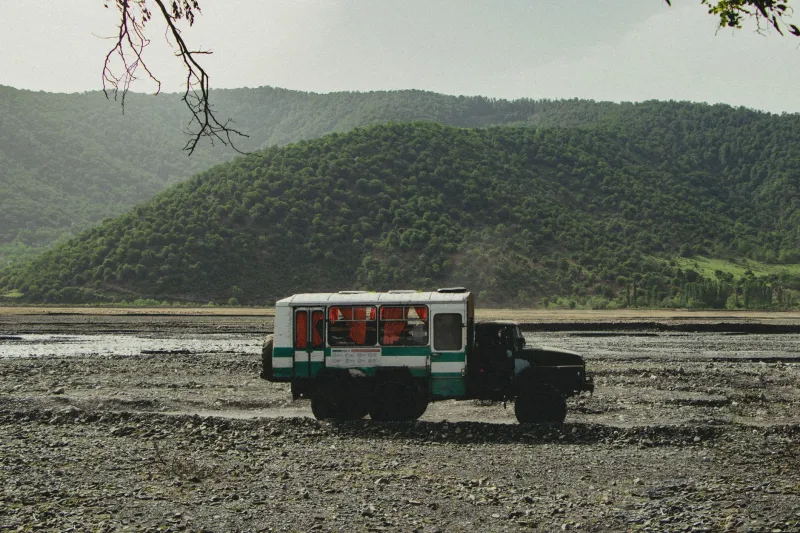
What You See Online vs. What Shows Up at the Trailhead: The Honest Truth About Renting Adventure Vehicles
There's a specific kind of disappointment that hits somewhere between signing the rental agreement and pulling out of the lot. You spent three weeks planning a backcountry run through the Colorado high country or a desert crawl outside Moab, you reserved what looked like the perfect rig, and then — there it is. Scuffed up, a little tired, with a roof rack that rattles like a bag of loose change every time you hit a bump. Welcome to the gap between the dream and the driveway.
This isn't a complaint session. It's a reality check — and honestly, it's one that can save your trip if you read it before you book.
The Glossy Photo Problem
Rental company websites are marketing tools first and information sources second. The vehicle pictured in that hero image? It might be a press photo from the manufacturer, a specially prepped demo unit, or the one pristine example in a fleet of fifteen. None of that is necessarily dishonest, but it does mean you're making a decision based on aspirational imagery rather than the actual condition of what you'll be driving.
Here's what that photo rarely shows: the wear on the suspension after 40,000 miles of hard use, the aftermarket lift that was installed by someone who wasn't a professional, the tires that are technically legal but sitting at the shallow end of tread depth, or the recovery gear that's included in the listing but lives in a bag so disorganized you'd spend twenty minutes just figuring out what's what.
Before you book anything, ask the company directly: Can I see photos of the actual vehicle I'll be renting, not stock images? A quality rental operation will say yes without hesitation.
Capability Claims vs. Trail Reality
Rental descriptions love the word "capable." Four-wheel drive capable. Off-road capable. Adventure capable. But capability is a spectrum, and where a vehicle falls on that spectrum matters enormously depending on where you're headed.
A stock Jeep Wrangler with factory tires is a genuinely capable machine — on moderate trails. Put it on something like the Rubicon Trail in California or a gnarly technical section in the Ouachita Mountains, and you're going to wish you had lockers, skid plates, and a few more inches of clearance. A rental company calling their rig "off-road ready" doesn't mean it's ready for your off-road.
Ask specific questions:
- Does it have front and rear locking differentials?
- What's the approach and departure angle?
- How much ground clearance are we working with?
- What size tires, and what's the current tread depth?
- Has the suspension been modified, and if so, by whom?
If the person on the other end of the phone can't answer those questions fluently, that tells you something important about how seriously they take the adventure side of their business.
The Maintenance Mystery
High-use rental vehicles live hard lives. They're driven by people of wildly varying skill levels across terrain that pushes every component to its limit. Responsible rental companies keep meticulous maintenance logs and pull vehicles from rotation when something needs attention. Less responsible ones run rigs until something actually breaks — sometimes while you're on it.
Before you take delivery, do your own walkthrough. Check the fluid levels if you can access them. Listen for anything unusual when you start it up. Test the four-wheel drive system in the parking lot before you're ten miles down a dirt road. Look at the undercarriage if it's accessible — fresh oil streaks or obvious damage are red flags worth raising before you sign anything.
Also ask: When was this vehicle last serviced? Is there a maintenance log I can look at? A rental company that's proud of how they care for their fleet will show you that documentation without making you feel like you're asking for something weird.
Insurance: The Fine Print That Can Ruin Your Month
This is where a lot of renters get genuinely blindsided. Standard rental insurance — whether it's through the company, your credit card, or your personal auto policy — often has specific exclusions for off-road use. Read that again: off-road use. The thing you're renting the vehicle to do may be exactly the thing your insurance won't cover.
Common exclusions include damage from water crossings, rollover events, damage to the undercarriage, and anything that happens on roads not maintained by a public agency. Some policies exclude anything that occurs outside a certain distance from a paved road.
Before you book, call your insurance provider and ask them directly what's covered. Do the same with your credit card company if you're planning to use their coverage. Then ask the rental company what their own damage waiver actually covers and what it excludes. Get it in writing. The $40-a-day damage waiver that seems expensive in the moment looks very different when you're staring at a cracked differential housing and wondering who's paying for it.
Gear Included vs. Gear Actually Useful
Many adventure rental listings tout included gear as a selling point — recovery boards, tow straps, first aid kits, navigation tools. Great. But there's a meaningful difference between gear that's technically present and gear that's ready to work when you need it.
Ask to see the recovery kit before you leave the lot. Check that the tow strap isn't frayed. Make sure the recovery boards are the real thing and not a knockoff that'll snap under load. Confirm the first aid kit is stocked and not just an empty bag with a few bandages rattling around at the bottom.
If you're planning serious backcountry travel, don't rely entirely on what the rental comes with. Supplement it with your own gear based on where you're actually going.
How to Ask the Right Questions Before You Book
The renters who show up and get exactly what they expected are almost always the ones who did the homework upfront. Here's a quick framework for vetting any adventure vehicle rental:
About the vehicle:
- Request photos of the specific unit, not fleet photos
- Ask for the year, trim level, and any modifications
- Get specifics on tires, lift, and recovery equipment
About maintenance:
- Ask when it was last serviced and what was done
- Request access to the maintenance log
- Ask how they handle mechanical issues that arise mid-trip
About insurance:
- Get a written breakdown of what the damage waiver covers and excludes
- Confirm whether off-road use is covered or excluded
- Ask about the process if something goes wrong on the trail
About support:
- Does the company offer 24/7 roadside assistance?
- What happens if the vehicle breaks down in a remote area?
- Is there a backup vehicle available if yours needs to be pulled?
The Bottom Line
Renting an adventure vehicle can be an incredible way to access terrain and experiences that would otherwise require owning and maintaining a rig yourself. But the best trips start with honest expectations — about what the vehicle can do, what condition it's actually in, and what you're covered for if things go sideways.
The rental companies worth your business are the ones who welcome these questions. They're proud of their fleet, transparent about their policies, and invested in sending you out there set up for success. The ones who get defensive or vague when you ask for specifics? That's your answer right there.
Do the homework. Ask the hard questions. And when that rig finally pulls up at the trailhead, you'll know exactly what you're working with — and you'll be ready to make the most of every mile.