Be Honest With Yourself Before You Book: Matching Your Real Skills to the Right Off-Road Rig

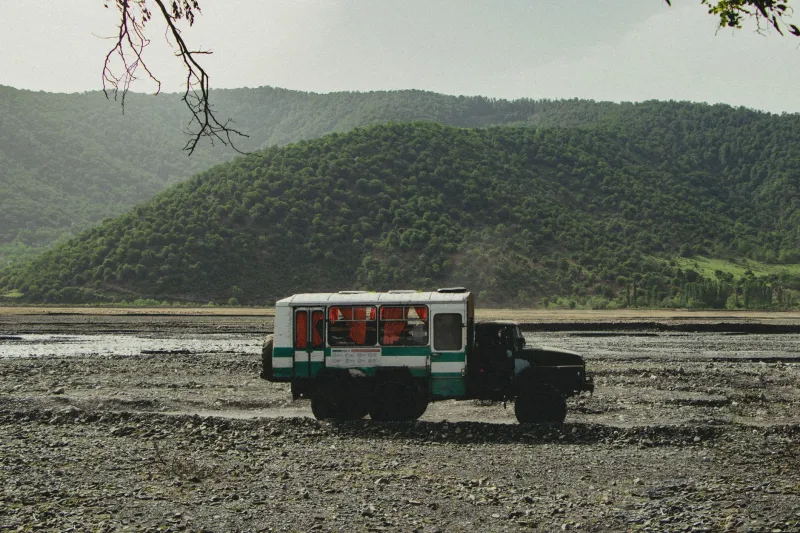
Photo by Photo by Alex Moliski on Unsplash on Unsplash
Here's a scenario that plays out more often than anyone likes to admit: an adventurous traveler books a serious off-road vehicle, drives confidently out of the rental lot, and then hits their first real trail obstacle. Suddenly, the gap between wanting to be capable and actually being capable becomes very, very clear.
Nobody wants to be that person. And honestly, nobody has to be. The secret is doing a genuine skills check before you hand over your credit card — not after you're already three miles into the backcountry.
At RentWildcat, we want you out there having the time of your life. But we also want you coming home. So let's talk about how to figure out which vehicle actually fits you right now, not the version of you that exists in your head.
Start With the Hard Question: What Have You Actually Driven Off-Road?
Experience on paved roads doesn't transfer to trails the way most people expect. Driving a lifted truck through suburban traffic is not the same as managing traction on a loose shale descent. And watching YouTube trail runs, while genuinely educational, is not a substitute for seat time.
Be specific with yourself. Ask:
- Have you ever driven on unpaved roads for more than 30 minutes at a stretch?
- Have you used 4WD Low range before — and do you understand when to use it?
- Have you navigated a vehicle across a water crossing, a steep side slope, or a rocky wash?
- Have you recovered a stuck vehicle, or been part of a recovery?
If your honest answers are mostly "no" or "not really," that's not a dealbreaker. It just means you're in the beginner-to-intermediate range, which is a totally valid place to be. It also means you should be looking at capable but forgiving vehicles — think a well-equipped 4x4 SUV rather than a purpose-built rock crawler with a manual locker.
The Vehicle Spectrum: What Each Class Actually Demands
Not all off-road rentals are created equal. Here's a rough breakdown of what different vehicle types require from the person behind the wheel.
Moderate 4x4 SUVs and Crossovers These are your entry-level adventure rigs — think vehicles with decent ground clearance and all-wheel drive or part-time 4WD. They handle graded forest roads, light gravel, and mild dirt trails without drama. If you're new to off-roading or primarily planning to access dispersed campsites and scenic overlooks, this is your lane. Skill requirement: basic comfort with unpaved roads and an understanding of when to slow down.
Mid-Range Trail Trucks and Capable 4x4s Step up to a full-size 4x4 with a locking differential, skid plates, and real articulation, and you're in a different conversation. These rigs can tackle rocky two-tracks, moderate water crossings, and technical climbs — but they demand a driver who understands weight transfer, throttle control on loose terrain, and how to read a trail line before committing to it. Skill requirement: prior off-road experience, comfort with 4WD Low, and solid spatial awareness in tight spaces.
High-Clearance Rock Crawlers and Extreme Off-Road Builds This is the deep end. Vehicles in this category are engineered for extreme terrain — steep ledges, boulder fields, serious articulation. They're incredible machines, but they punish inexperience quickly. If you've never driven a rock crawler, renting one for a solo expedition is not the move. Skill requirement: significant off-road experience, ideally including guided trail runs or formal training, plus a solid co-pilot or group.
Physical Readiness: It's Not Just About Driving
This part gets overlooked constantly. Off-road driving is physically demanding in ways that people don't anticipate. You're constantly bracing against lateral movement, managing the wheel on rough terrain, and staying alert over long stretches of challenging road. Multi-day trips layer fatigue on top of all of that.
Ask yourself:
- Can you comfortably manage the physical act of climbing in and out of a high-clearance vehicle repeatedly?
- Do you have any shoulder, wrist, or back conditions that could be aggravated by hours of rough-terrain driving?
- Are you prepared to physically assist with a recovery if the situation calls for it — moving rocks, running a tow strap, operating a winch?
None of these are meant to exclude anyone. They're meant to help you prepare. If physical limitations are a factor, choosing a less extreme vehicle and a less technical route is a genuinely smart decision, not a concession.
Mental Preparedness: The Underrated Half of Off-Road Capability
Skilled off-road drivers share one trait more than any technical ability: they make calm decisions under pressure. When the trail gets sketchy, panic is the enemy. Tunnel vision, poor risk assessment, and the sunk-cost feeling of "I've already driven this far" cause more problems than skill gaps do.
Before you book, think honestly about how you respond when things don't go as planned. Do you get rattled? Do you have a tendency to push through discomfort instead of backing off? Are you comfortable making the call to turn around?
If trail situations sound like they'd spike your anxiety significantly, that's useful information. It means choosing a vehicle and a route that leave you a wide margin of safety — so that when something unexpected happens (and it will), you're not already at your limit.
A Quick Self-Scoring System
Run through these statements and count how many feel genuinely true for you:
- I have driven off-pavement in a 4WD vehicle on multiple separate occasions.
- I understand how to engage 4WD Low and when it's appropriate.
- I have navigated a trail with obstacles — rocks, ruts, or water — without a guide.
- I know what a recovery kit contains and have used at least one piece of it.
- I'm comfortable driving in remote areas without cell service.
- I can read basic topographic maps or use an offline navigation app.
- I've driven a large vehicle (full-size truck or SUV) in tight or technical conditions.
0–2 true: Start with a capable but forgiving SUV and choose well-maintained, moderate trails. Build from there.
3–4 true: You're solidly intermediate. A mid-range trail truck is within reach, especially with a good co-pilot and a planned route.
5–7 true: You've got the foundation for more serious rigs. Just match the vehicle to the specific terrain you're actually heading into.
Use Your Rental Conversation as a Resource
When you're booking through RentWildcat, you're not just filling out a form. You've got access to people who talk to off-roaders every day and know the terrain in the areas you're headed. Tell them where you're going, what your experience level actually is, and what your group looks like. A good rental conversation should feel like a gear check, not a sales pitch.
The right vehicle isn't always the most impressive one on the lot. It's the one that matches your real skills, your actual route, and the adventure you're genuinely ready to have. That's the rig that brings you back with great stories instead of a tow bill.
So before you book — be honest with yourself. The trail will be too.