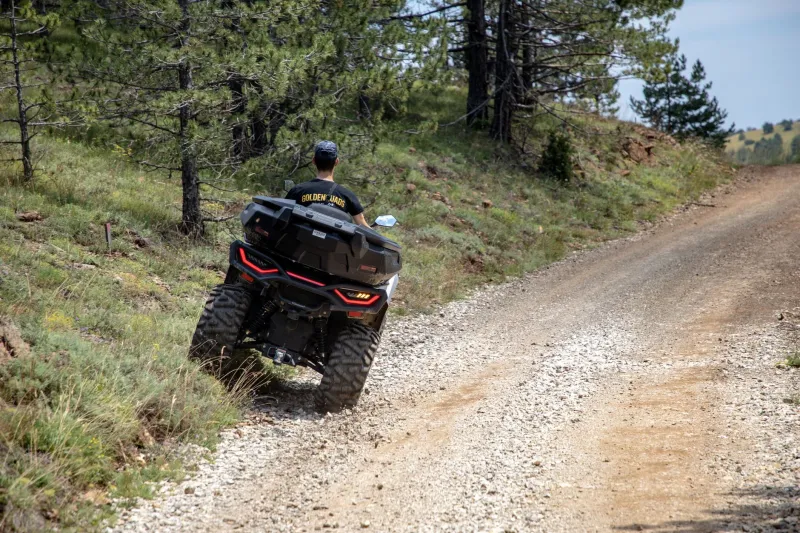
Miles Apart: What Happens When Your Adventure Buddy Has a Completely Different Definition of 'Too Far'
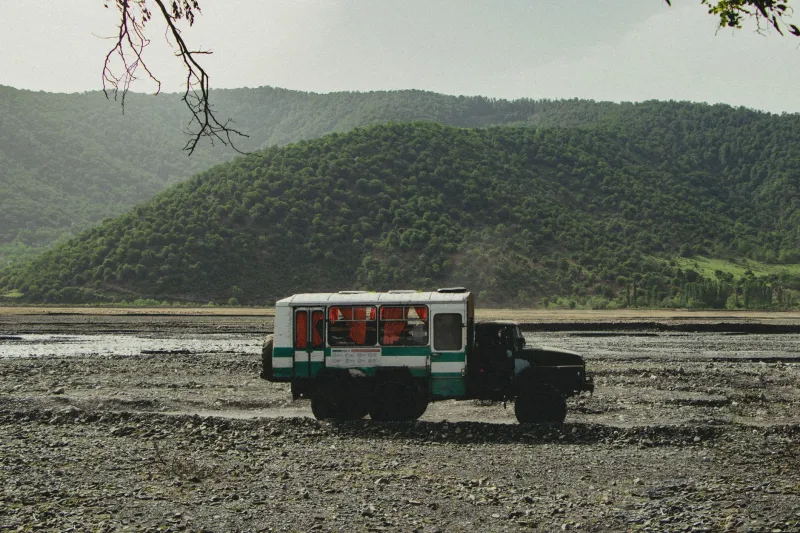
You've driven with this person a hundred times. You've split gas money, shared playlists, grabbed coffee at the same truck stop off I-70. You thought you knew them. Then somewhere deep in the San Juan Mountains — past the last cell tower, past the last paved road, past the last anything — they ask you to stop the rig and turn around.
And you realize: you don't actually know them at all.
Risk tolerance is one of those things that sounds abstract until it isn't. Until you're staring at a washed-out shelf road with a 400-foot drop on one side and your buddy is white-knuckling the grab handle while you're already calculating your line. That moment doesn't just reveal a difference in comfort levels — it can split a friendship right down the middle.
The Illusion of Knowing Someone Before the Trail Does
Most friendships are built in low-stakes environments. Bars, backyards, group chats. You know how someone acts when things are easy and comfortable. Off-road adventuring strips all of that away fast.
Once you're miles from pavement, every decision carries weight. Do you cross that creek? Do you camp on that exposed ridge with weather rolling in? Do you air down more and risk a sidewall, or keep pressure and risk getting stuck? These aren't abstract choices — they're real-time negotiations between people with different nervous systems, different life experiences, and different internal calculators for what "acceptable risk" actually means.
The tricky part is that neither person is wrong. Someone who wants to turn back at the first sign of deteriorating trail conditions isn't a coward. Someone who wants to keep pushing isn't reckless. They're just operating from completely different internal frameworks — frameworks that, in everyday life, never come into conflict.
Why It Hits Harder Than a Normal Disagreement
Here's what makes risk tolerance mismatches especially brutal: they feel personal even when they aren't.
When your co-pilot wants to bail on a route you've been planning for three months, it's easy to read it as a lack of trust in your driving. When you want to push through and your partner doesn't, they can feel like you're prioritizing the adventure over their safety. Both interpretations are emotionally charged, and both are usually wrong.
But feelings don't care about logic when you're stressed, dehydrated, and 60 miles from the nearest mechanic. Arguments that start as "I just think we should be careful" can escalate into something that echoes long after the trip ends.
A lot of off-road friendships don't survive these moments — not because either person did something terrible, but because neither person knew this incompatibility existed until it was too late to handle it gracefully.
Spotting the Signs Before You're in the Backcountry
The good news: there are ways to surface these differences before you're white-knuckling it on a rutted two-track with no cell service.
Talk through hypotheticals before you go. Before any serious backcountry trip, run some "what would you do if" scenarios past your crew. What if the trail gets significantly worse than the map shows? What if we lose an hour to a mechanical issue — do we push to camp or turn back? What if weather moves in fast? The answers will tell you a lot.
Do a shorter shakedown run first. Don't make a five-day remote expedition your first real test of adventure compatibility. Pick a day trip or an overnight on a trail with a clear bailout option. Watch how your group responds to small challenges — a rocky section, a tricky water crossing, unexpected mud. Those micro-moments are your data.
Ask directly about comfort levels. It feels awkward, but it works. "Hey, how do you feel about exposed ridge driving?" or "Are you comfortable if we're in a situation where we have to self-recover?" These aren't offensive questions — they're responsible ones.
Setting Ground Rules Before Conflict Sets Them for You
One of the most underused tools in group adventure planning is the pre-trip agreement. It sounds formal, but it doesn't have to be. It's basically just a conversation where everyone agrees on a few key things before wheels roll.
Decide on a turnaround philosophy. Is it majority rules? Does one "no" mean you stop? Is there a designated decision-maker for safety calls? Getting this on the table before you're emotionally invested in a route makes it infinitely easier to follow through.
Also agree on what counts as a "real" problem versus normal discomfort. Off-roading is inherently uncomfortable sometimes. Dust, heat, a sketchy descent, getting briefly stuck — these are part of the experience. But there's a line between discomfort and genuine danger, and your group needs a shared definition of where that line is.
Finding People Who Actually Match Your Risk Philosophy
If you've had one of these trail fallouts, you already know how much it matters to adventure with people who are genuinely aligned with you — not just people you like in regular life.
The off-road community is big enough that you don't have to settle. Local overlanding clubs, trail groups on Facebook and Reddit, events like Overland Expo — these are all places to meet people who have already self-selected into a certain style of adventuring. When you meet someone through a trail event, you already know they showed up. That's baseline data.
Being honest about your own style matters too. If you're a push-through-it driver who loves technical terrain and long days, say that. If you prefer a more relaxed pace with solid bailout options, own it. The right people will self-sort.
It's Not a Breakup — It's a Reassignment
Here's a reframe worth holding onto: discovering that a friend isn't your ideal adventure partner doesn't mean the friendship is broken. It just means you've learned something true about each other.
Maybe your college roommate is your favorite person to road trip with but not the right co-pilot for a serious backcountry push. Maybe your neighbor is great on easy trails but isn't built for multi-day technical routes. That's okay. People can occupy different roles in your life.
The friendships that do survive these revelations are usually the ones where both people were honest, both people felt heard, and neither person made the other feel stupid for their comfort level.
The trail has a way of showing you exactly who people are. That's actually one of the things that makes off-road adventuring so valuable. The key is going in with eyes open — so that what you discover out there brings you closer to the right people instead of further from the wrong ones.
Choose your crew carefully. The trail will take care of the rest.