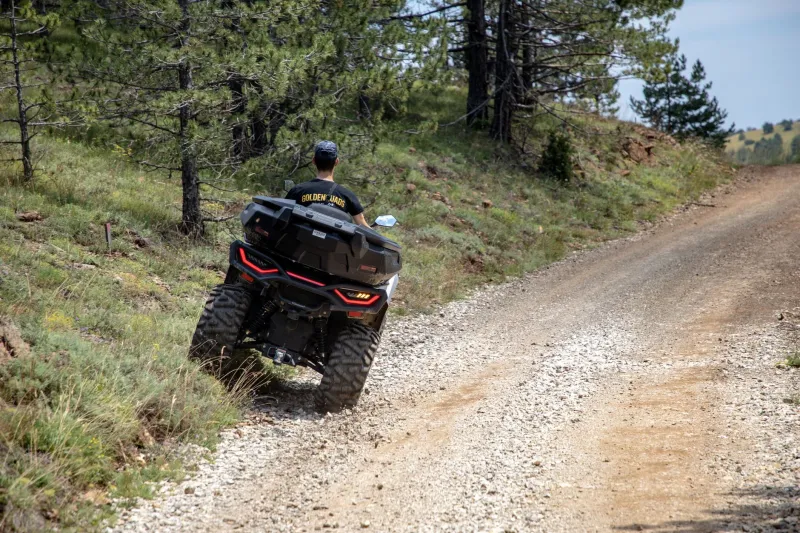
When the Desert Fights Back: Recognizing and Surviving Heat Illness Miles from Anywhere

Photo by Photo by Jason Zeis on Unsplash on Unsplash
You're twenty miles down a wash in the Sonoran Desert. The trail's been chunky but manageable, the scenery's incredible, and you're feeling good. Then you notice your buddy in the passenger seat has gone quiet. Not tired-quiet. Something-is-wrong quiet. His skin looks weird. He can't quite finish his sentences.
This is the moment most people don't train for — because heat exhaustion doesn't announce itself with sirens. It creeps in while you're busy enjoying the ride.
Desert off-roading is one of the most rewarding things you can do with four wheels and a free weekend. But the same conditions that make places like Moab, the Anza-Borrego Desert, and the Nevada backcountry so jaw-dropping also create a physiological gauntlet your body isn't naturally built to handle. Understanding how heat-related illness actually works — not just the textbook version, but the real-world, dust-in-your-teeth version — might be the most important thing you read before your next desert run.
Why Off-Roaders Are Especially Vulnerable
Heat illness isn't just a hiker problem. Trail drivers face a specific combination of stressors that makes them surprisingly high-risk.
First, there's the false sense of security that comes with being in a vehicle. You're not hiking. You're not backpacking. You're sitting down, for the most part. But your body is still working — hard. Gripping a steering wheel through technical terrain, tensing your core on rocky descents, constantly scanning for obstacles — it all burns energy and generates heat. Add in the ambient temperature radiating off the desert floor (which can exceed air temp by 30 degrees or more) and a cab that traps heat even with windows down, and you've got a pressure cooker situation.
Second, off-roaders tend to underestimate their water needs because the exertion feels lower than it actually is. You're not sweating like a runner. But you're losing fluid steadily, and at altitude or in low humidity environments, sweat evaporates so fast you might not even notice it.
Third — and this is a big one — the focus required to drive technical terrain actively suppresses your awareness of how you're feeling. You're locked in. You're problem-solving. Your brain is not prioritizing the signal that says "hey, I'm getting dangerously hot."
The Warning Signs That Actually Show Up First
Forget the dramatic collapse you've seen in movies. Real heat exhaustion usually starts subtle. Here's what to actually watch for in yourself and your crew:
Mood shifts. Irritability, unusual quietness, or sudden difficulty making decisions are often the first signs. If someone who's been chatty goes flat, pay attention.
Mild confusion or slowed responses. Asking someone a simple question and getting a delayed or garbled answer is a red flag. This is your brain struggling under thermal stress.
Skin that looks wrong. Pale, clammy skin in heat is early-stage exhaustion. Dry, hot, flushed skin with no sweating is an emergency — that's heat stroke territory.
Headache and nausea together. Either one alone might be dehydration. Both together, especially with light sensitivity, is your body sending a serious message.
Muscle cramps that won't quit. Not the normal soreness from bracing on rough terrain. Sudden, intense cramping — especially in the legs and abdomen — signals electrolyte depletion.
The window between "not feeling great" and "we have a real emergency" can be surprisingly short in extreme heat. That's why catching the early signs matters so much.
Hydration Myths That Can Actually Hurt You
Let's kill a few bad ideas that circulate in trail culture.
Myth 1: Drink when you're thirsty. Thirst is a lagging indicator. By the time you feel thirsty in desert conditions, you're already meaningfully dehydrated. Drink on a schedule — roughly 16 to 20 ounces per hour when you're active in high heat, more if you're doing physical work like recoveries or trail clearing.
Myth 2: Water alone is enough. If you're sweating heavily over multiple hours, you're losing sodium, potassium, and magnesium alongside that fluid. Drinking large amounts of plain water without replacing electrolytes can actually cause hyponatremia — dangerously low sodium levels — which mimics heat exhaustion and can become life-threatening. Bring electrolyte packets, sports drinks, or salty snacks. Seriously.
Myth 3: Alcohol the night before doesn't matter. It absolutely does. Alcohol is a diuretic. Starting a desert day even mildly dehydrated from the night before puts you behind the curve before you've turned a wheel. If you're running trails the next morning, hydrate aggressively the evening before.
Myth 4: The cooler is just for drinks. Your cooler is also a medical tool. Cold wet rags applied to the neck, armpits, and groin are among the fastest ways to drop core body temperature in an emergency. Pack extra ice with that in mind.
What to Do When Someone Goes Down
If someone in your group shows signs of moderate to severe heat exhaustion — confusion, inability to stand, hot dry skin, rapid weak pulse — you're now in emergency management mode. Here's the protocol for remote backcountry scenarios:
Stop. Get them out of the sun immediately. Use your rig for shade if there's nothing else. Lay them down and elevate their legs slightly to help blood flow.
Cool them aggressively. Wet cloth to the neck, armpits, and inner wrists. Fan them actively. If you have ice, wrap it in fabric and apply to those same areas. Do not dump ice water on them all at once — it can cause blood vessel constriction near the skin and actually slow cooling.
Small sips of cool water with electrolytes if they're conscious and can swallow safely. Do not force fluids if they're confused or vomiting.
Activate your emergency communication device. This is why every backcountry rig should carry a satellite communicator — a Garmin inReach, SPOT, or similar device. Cell service in the desert backcountry is essentially a myth. Get a rescue request out early, even if you think you can manage it. Desert conditions can deteriorate fast.
Monitor closely. If symptoms improve with cooling and hydration within 30 minutes, continue monitoring but start planning your exit. If symptoms worsen, or if the person loses consciousness or stops sweating entirely, that's heat stroke — a true life-threatening emergency requiring immediate evacuation.
Building Heat Safety Into Your Pre-Trip Routine
The best time to deal with heat illness is before it happens. A few habits that should be non-negotiable on desert runs:
- Check the forecast and plan accordingly. Trails that are perfect in April can be genuinely dangerous in July. Know your temperature threshold and stick to it.
- Pre-hydrate the day before. Not just the morning of.
- Tell someone your route and expected return time. If you don't check in, they call for help. Simple.
- Carry more water than you think you need. A good rule of thumb for desert day trips: one gallon per person, minimum. For multi-day runs, plan for more and know where any water sources are along your route.
- Schedule shade breaks. Especially between 11am and 3pm when solar radiation peaks. Use that time to eat, rest, and let your rig cool down.
The desert is one of the most stunning environments you can explore on four wheels. It rewards preparation and punishes complacency in equal measure. Go in with your eyes open, your cooler stocked, and your crew briefed — and it'll give you memories that last a lifetime.
Go in unprepared, and it'll give you a story you might not be around to tell.